🃏Card Compendium
Every card with its per-level effects and collection GP, filtered by tier and equipment slot.
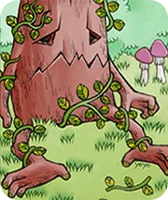
Elder Willow Card
Elder Wilow Card
There were once Seelies who dwelled in this ancient willow tree, bestowing it with wisdom to move and think. But now these Seelies have clearly been corrupted

Poring Card
Poring Card
Legend has it that Porings were made from the sweat of Odin during the construction of Midgard, thus they take the form of droplets. They absorbed world elements as the sweat fell upon the surface of the world, that's why they have various attributes

Mastering Card
Mastering Card
Giant Poring, many small Porings consider it their home
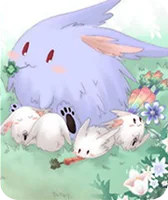
Eclipse Card
Eclipse Card
Mutated Lunatic, their bites spread the blue disease
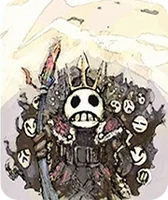
Goblin Leader Card
Goblin Leader Card
Goblins are monsters that have appeared in various folk legends in Europe since the Middle Ages, bestowed with various abilities, appearances, and personalities depending on the region. They're almost always small, quirky, mischievous, and very greedy for treasure
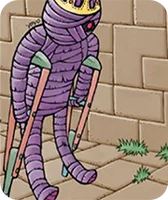
Osiris Card
Osiris Card
Osiris is the god of the underworld, as well as the god of agriculture and fertility in ancient Egyptian mythology. Although Osiris is the god of the underworld, he is not a devil or a god of darkness; he symbolizes the Egyptian hope for eternal life and abundance. According to legend, Osiris was one of the earliest kings in Egyptian history, and his reign was described as a prosperous era. Osiris taught the people how to cultivate the land, established laws to protect justice, prescribed rituals to worship the gods, and frequently traveled the world to help people outside Egypt establish cities. Osiris was married to his sister Isis, who often assisted him in governing the kingdom when he was away. Osiris was murdered by his brother, Set, the god of deserts and storms. Set had coveted Osiris' throne for a long time and constructed a splendid box based on Osiris' body shape. During a banquet, Set announced that whoever could fit into the box perfectly would receive it as a gift. Guests were attracted to the box and lay inside to try it out, until Osiris lay down and fit perfectly. At that moment, Set's accomplices rushed forward, sealed the box with nails and lead, and threw it into the Nile River. This was said to have caused the annual flooding of the Nile. Isis found the coffin, but Set discovered it while hunting. He had Osiris's body dismembered, scattering the pieces throughout Egypt. The loyal Isis painstakingly retrieved these remains and, using her witchcraft, briefly resurrected Osiris. In the final moments before her beloved departed for the underworld, she conceived a child, Horus, the god of revenge, who would avenge his father and reclaim the throne of Egypt in the future. In order to reward Osiris for his achievements in ruling, the gods appointed him as the god of the underworld, responsible for the fate of the deceased. To emphasize their eternal godhood, the later pharaohs claimed that upon the death of the previous pharaoh, they would journey to the underworld to assume the position of Osiris, while they themselves became the divine incarnation of Horus, ensuring an unending lineage. From the tribal city-states of Lower Egypt around 5450 BCE to the Arab conquest of Egypt in 639 CE, Egyptian mythology and civilization underwent changes and integrations over thousands of years. Surrounded by deserts and the sea, the survival of the ancient Egyptians relied heavily on the fertile plains bestowed by the annual flooding of the Nile. Not only did the regular ebb and flow of the Nile taught the Egyptians advanced calendar and agricultural techniques, it also led them to contemplate the universe and the cycle of life and death. The ancient Egyptians believed that they would go to the underworld after death and considered the body as the vessel of the soul, believing that the soul would live on even after the body died. They believed that the soul would be resurrected in the new world, so it was necessary to preserve the body for the soul to have its own dwelling. Thus, the Egyptians invented embalming to make mummies. The legend of Osiris is one of the most important parts of Egyptian mythology. The Sun God holds great significance, yet humans mostly regard the Sun God with awe; thus, pharaohs often claim descent from the Sun God. Meanwhile, the desires of common folk for bountiful harvests and resurrection are embodied in Osiris, hence he is widely accepted and revered by the Egyptian populace. Unlike the ever-changing beliefs in the sun god that varied with regions and rulers, the worship of Osiris was widespread throughout Egypt, with annual ceremonies held to celebrate Osiris's resurrection. The story of Osiris also carries some historical significance. Set, the god who killed him, is believed to be the chief god of other neighboring ethnic groups (such as the Berbers) and was considered a god that blessed foreigners after being incorporated into Egyptian mythology. Around 1650 BEC, foreign invaders briefly ruled Egypt and chose Set as their chief god. After the foreign rulers were overthrown, Set's image was demonized. The story of Set killing Osiris and being defeated by Horus may be a mythical representation of this period of history.
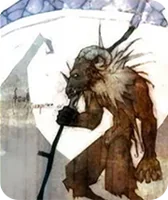
Baphomet Card
Baphomet Card
In the legend of Rune, Odin led the gods to win the doomed war of Ragnarok. Expecting to usher in peace, he was then attacked by Baphomet, a false angel of unknown origin, and the world was once again at risk of being destroyed. Odin sacrificed himself to take down Baphomet, saving the world once again. Baphomet is one of the most famous demons in Christian mythology. Baphomet originated from the 12th-century European poets' descriptions of their enemy, the Prophet Muhammad. During the religious persecution of the Knights Templar by the French king in the 14th century, Baphomet was accused of being an evil idol secretly worshipped by the Templars. Some members of the Knights were forced to admit this accusation, even though each one of them had a different image of Baphomet that they made up in their gibberish during the torture. Baphomet became a demon created by the monarchy to suppress heresy. The modern image of Baphomet comes from the French occultist Eliphas Levi, who depicted the classic Baphomet as a goat-headed demon with a pentagram. Since then, this image has been widely used by occult organizations and writers, with the Satanic Temple adopting the Baphomet symbol as their emblem.
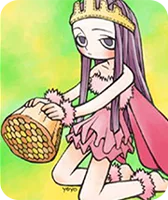
Mistress Card
Mistress Card
Mistress, all worker bees and bee soldiers will bow to her
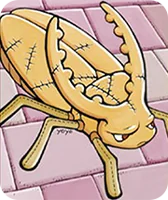
Golden Bug Card
Golden Bug Card
Golden Thief Bug is a remnant of gold overlooked by the mythical dwarf craftsman Sindri. It lurks in the sewers of Prontera and is sometimes referred to as the Golden Snitch.
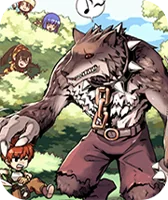
Atroce Card
Atroce Card
Atroce, meaning cruel in Rune, is a giant werewolf that vents its violence on all his prey and disobedient kin
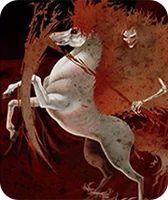
Nightmare Terror Card
Nightmare Terror Card
The Ghost Horse, visible only to the dead. If it appears in the world of the living, it signifies an imminent plague.
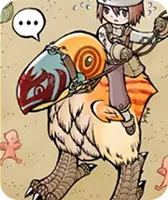
Grand Peco Card
Pecopeco Card
The gorgeous birds of the desert, the standard mounts of royal knights.
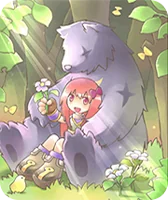
Leib Olmai Card
Leib Olmai Card
Leib Olmai, originates from the forest spirit Leib-Olmai in the Sami mythology, literally translated as Alder Man"". The Sami people live in areas closer to the Arctic Circle than the more familiar Norse Vikings, facing harsher and colder environments. They must hunt for prey in the harsh winter to ensure their survival, often facing attacks from bears in the forest. The Sami people performed rituals of prayer around the alder tree before hunting, hoping that their hunting god, Leib-Olmai, will protect them from the bear's wrath. And interestingly, the god of protection they prayed to usually appears in the form of a bear.
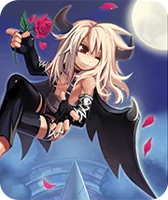
Incubus Card
Incubus Card
Demon attendant, often appearing in pairs with the demon maid
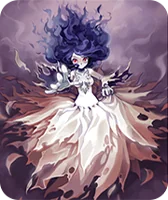
Banshee Card
Banshee Card
Banshee is an ever-present ghost that haunts the monastery of the Nameless Isle
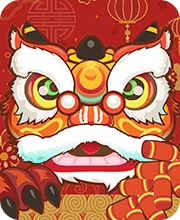
Dancing Dragon Card
Dancing Dragon Card
The Dancing Dragon, also known as ""Nian,"" is a mythical creature in Han Chinese mythology. According to legend, every New Year's Eve at midnight, the Dancing Dragon would attack villages, bringing cruel massacres to those it occupied. Its horns atop its head serve as weapons. People exploited the three major weaknesses of the Nian beast by setting off firecrackers, pasting Spring Festival couplets, and repelling their attacks. To prevent the repeated harassment of the Nian beast, setting off firecrackers and pasting Spring Festival couplets gradually became holiday customs, making the Spring Festival synonymous with the Chinese culture.
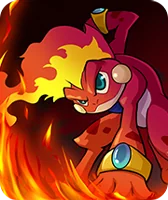
Red Flame Frog Card
Red Flame Frog Card
Stuck on the Flame Continent, the frog tribe, tormented by intense flames, has finally evolved to possess equally powerful flames. They are the descendants of the legendary fire-roasted frogs.
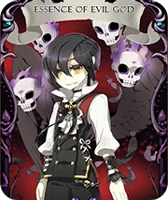
Reborn Demigod Card
Rebirth Demigod Card
Every legend has an evil Satan, and every legend has a warrior who defeated Satan. Yet the storyteller doesn't know that the warrior avoided all possibilities of defeat with despicable means and chose the only path to victory... Now I also have the power to change fate.
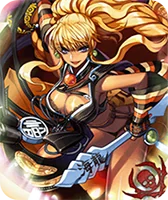
Sarah Irene Card
Sarah Card
As an elite warrior of Valhalla, Sarah is extremely powerful in both strength and magical abilities. Sarah has the ability to summon Frost Giants.
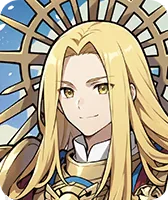
Holy Radiance Judge Card
การ์ดผู้พิพากษาแสงศักดิ์สิทธิ์
A holy knight of the Prontera Kingdom, blessed by the gods, clad in holy light, sworn to judge all darkness and betrayal.

Ken, the Eagle
เตี่ยซุง
The leader of Science Ninja Team Gatchaman, pilot of the God Phoenix. He has a strong sense of justice and remains calm in critical moments, serving as the team’s spiritual pillar and core decision-maker.
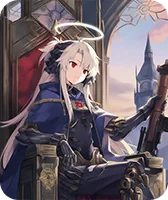
Holy Light Crossbow
ผู้ใช้หน้าไม้แสงศักดิ์สิทธิ์
A divine envoy wielding a holy crossbow, smiting evil with sacred light.

Lunatic Card
Lunatic Card
Adorable creature fond of carrots, you'd want to cuddle it for warmth during winter
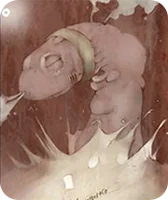
Hode Card
Hode Card
Hode is a giant underground creature in the Sograt Desert
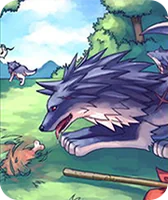
Vagabond Wolf Card
Vagabond Wolf Card
Powerful wargs, capable of adapting to any harsh environment. Some say they're offspring of Fenrir
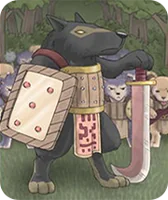
Kobold Leader Card
Kobold Leader Card
The leader of Kobolds, but always overshadowed by werewolves
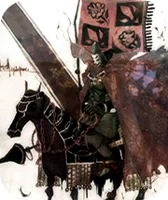
Abysmal Knight Card
Abysmal Knight Card
The Knights of the Abyss were affiliated with the White Knights founded by King Schmitz. They were a group of brave and loyal knights who protected the king's power and vanity. After Glast Heim was destroyed by dark magic, they were cursed into undead warriors, continuing to uphold the oath they had made with their remnants.
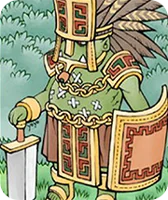
Orc Hero Card
Orc Hero Card
Orc Hero is a hero of the Orcs, commanding orc armies in wars against humans. Legend has it that his Swordship shook the sky and summoned thunder and lightning

Eddga Card
Eddga Card
Eddga is an ancient tiger species living in the Payon Forest. He enjoys smoking a pipe, and the locals are accustomed to its presence. Eddga believes that outsiders are barbarians who will destroy the mountainous environment. He will attack any travelers and adventurers daring to enter the mountains. The image of the pipe-smoking tiger comes from a common opening phrase used in traditional Korean stories: ""In the days when tigers still smoked..."", which means the same as ""Once upon a time..."". This is because in Korean folklore, it is believed that in the distant past, animals used to speak and live like humans
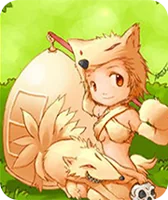
Moonlight Flower Card
Moonlight Flower Card
The fairy in the Payon Cave, capable of sensing the emotions of nearby humans It often battles adventurers who enters the cave